
 Chat
ChatNoticing an unusual amount of hair in the shower drain or watching your hairline slowly recede in the mirror can be an incredibly stressful experience. While shedding roughly 50 to 100 strands of hair a day is a completely normal part of the body’s natural hair growth cycle, continuous thinning indicates an underlying disruption.
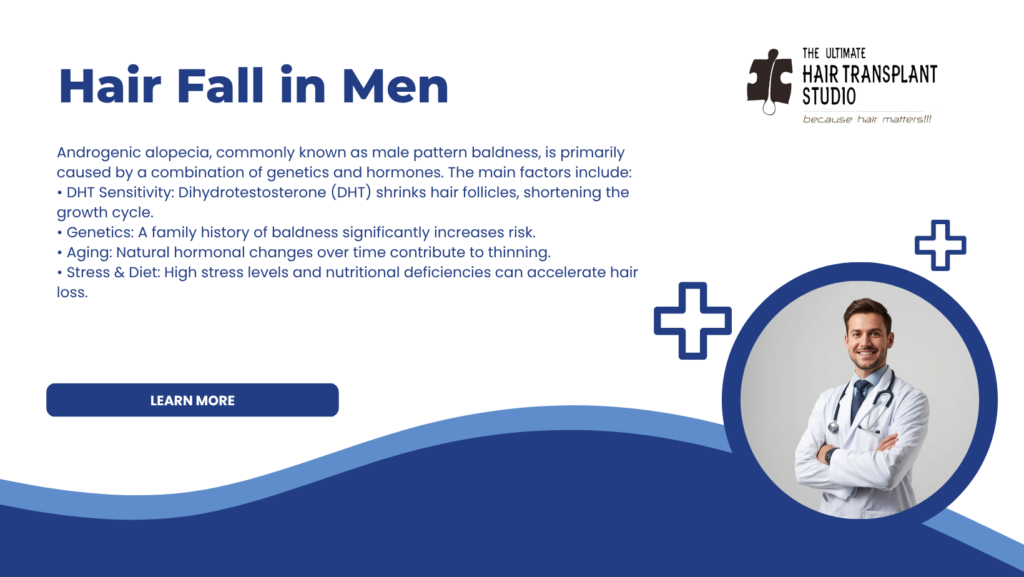
To fix hair loss effectively, you must first identify the correct trigger. Let’s look at the primary hair fall causes in men and how modern medicine addresses them.
1. Genetics and the DHT Hormone
Over 95% of all hair thinning in men is driven by a condition called Androgenetic Alopecia, commonly known as male pattern baldness.
- The Mechanism: This condition is entirely hereditary and is triggered by a male hormone byproduct called Dihydrotestosterone (DHT).
- The Effect: If your hair roots are genetically sensitive to DHT, the hormone binds to your hair follicles, causing them to slowly shrink (miniaturize). Over time, the hair grows thinner, lighter, and shorter until the follicle closes completely, leading to a receding hairline or a bald crown.
2. Chronic Stress and Telogen Effluvium
Experiencing a massive psychological shock, severe physical illness (like a high fever), or prolonged lifestyle stress can shock your hair cycle. This triggers a condition called Telogen Effluvium, which causes a large percentage of active growth hair follicles to suddenly enters a resting phase simultaneously. Roughly 2 to 3 months after the initial stressful event, patients experience sudden, diffuse hair shedding across the entire scalp.
3. Nutritional Deficiencies
Your hair cells are among the fastest-growing cells in your body, meaning they require a constant supply of specific nutrients to build strong hair shafts. Common dietary deficiencies that directly trigger male hair fall include:
- Iron and Ferritin: Low levels drop oxygen delivery to your hair roots.
- Vitamin D3 and B12: Essential for hair follicle cycling and cellular energy.
- Protein and Biotin: The basic building blocks of your hair’s keratin structure.
4. Scalp Health and Inflammation
A healthy scalp acts like fertile soil for your hair. Chronic scalp conditions such as severe dandruff (seborrheic dermatitis), psoriasis, or fungal infections cause deep tissue inflammation around the hair roots, weakening the anchor of the hair strand and leading to increased shedding.
Frequently Asked Questions
Can wearing caps or helmets frequently cause male hair fall?
No. This is a common lifestyle myth. Wearing a clean helmet or cap does not restrict blood flow or suffocate your hair roots enough to cause hair loss. However, if your headwear is excessively tight or dirty, the trapped sweat and friction can irritate your scalp or cause hair breakage.
Can hair fall caused by stress or nutrition be reversed? Yes, absolutely. Unlike genetic male pattern baldness, hair fall triggered by nutritional deficiencies or temporary stress is typically reversible. Correcting your diet, managing stress levels, and supporting your scalp with advanced non-surgical treatments like GFC (Growth Factor Concentrate) or Mesotherapy can quickly restore your natural thickness.
Internal Link to Pillar Page: If your hair fall has progressed to visible thinning, read our expert breakdown on the [Best Treatment for Male Pattern Baldness].
Conclusion
Identifying the true driver behind your hair fall is the most important step toward saving your hair. While lifestyle factors like stress and diet play a major role, genetic hair loss requires timely medical intervention to stop the DHT hormone from permanently shutting down your hair roots.
Struggling with shedding and looking for a real solution for Hair Fall in Vadodara? At Ultimate Hair Transplant Studio, we use advanced trichoscopic scalp scans to pinpoint the exact biological cause of your hair loss, providing you with a customized medical path forward.
👉 Book your professional hair fall assessment in Vadodara today!