
 Chat
ChatMale Pattern Baldness Treatment in Vadodara | PRP, GFC & Hair Transplant | Ultimate Hair Transplant Studio

Male Pattern Baldness Treatment in Vadodara
Introduction
Male pattern baldness is the most common cause of hair loss in men. If you’ve noticed a receding hairline, thinning at the crown, or gradual reduction in hair density, you’re not alone. Nearly half of all men experience some degree of male pattern baldness by the age of 50, and many begin noticing changes much earlier.
The good news is that modern medical treatments can slow the progression of hair loss, preserve existing hair, and in many cases restore natural-looking density. At Ultimate Hair Transplant Studio, we offer evidence-based treatment plans tailored to the stage of hair loss rather than a one-size-fits-all approach.
What is Male Pattern Baldness?
Male Pattern Baldness, medically known as Androgenetic Alopecia, is a genetically influenced condition where hair follicles gradually become smaller under the influence of the hormone DHT (Dihydrotestosterone).
Over time:
- Hair becomes thinner.
- Growth cycles shorten.
- Hair shafts become finer.
- Eventually, follicles may stop producing visible hair.
Without treatment, the process usually continues gradually over many years.
Common Signs
Patients often notice:
- Receding hairline.
- Thinning at the temples.
- Hair loss over the crown.
- Increased scalp visibility.
- Excessive hair shedding during washing or combing.
- Family history of baldness.
Early treatment generally offers the best opportunity to preserve existing hair.
Causes
Several factors contribute to male pattern baldness:
- Genetic predisposition.
- Sensitivity to DHT.
- Increasing age.
- Hormonal influences.
- Lifestyle factors may worsen shedding but are not usually the primary cause.
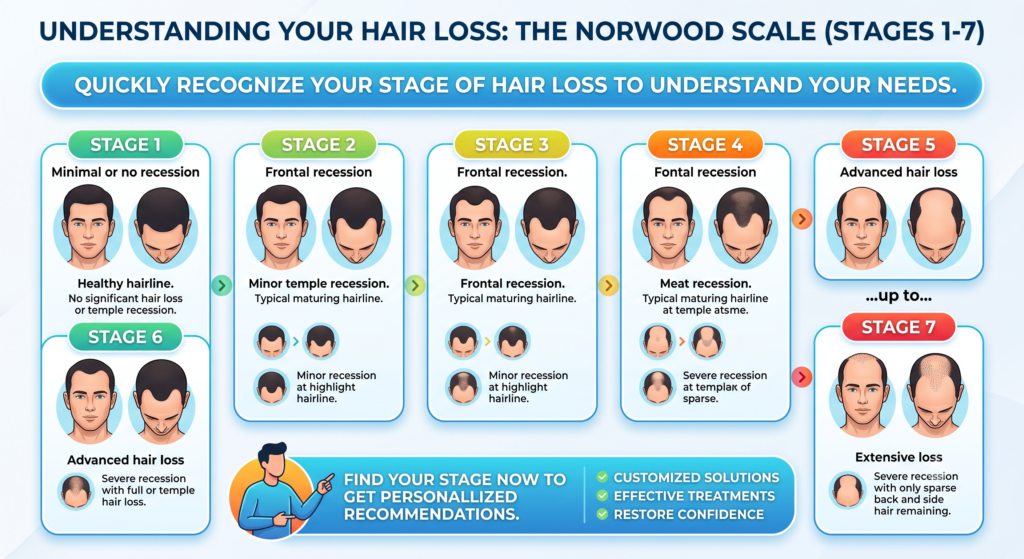
Stages of Male Pattern Baldness
Explain the Norwood Scale.
Include:
- Stage 1
- Stage 2
- Stage 3
- Stage 4
- Stage 5
- Stage 6
- Stage 7
Mention that treatment recommendations differ at each stage.
(Adding an infographic later would make this section even stronger.)
Treatment Options
Medical Management
For early hair thinning, medications may help slow progression and preserve existing follicles when appropriate. Treatment decisions should always be individualized after a medical consultation.
PRP Therapy
Platelet-Rich Plasma uses growth factors derived from your own blood to stimulate weakened follicles and improve hair quality.
Suitable for:
- Early thinning.
- Mild to moderate hair loss.
- Supporting transplanted hair.
Growth Factor Concentrate (GFC)
GFC delivers concentrated growth factors prepared from your own blood in a more standardized form than traditional PRP.
Potential benefits include:
- Reduced hair shedding.
- Improved hair thickness.
- Better follicular stimulation.
- Fewer inflammatory components than conventional PRP.
Hair Transplant
When follicles have become permanently inactive, a hair transplant offers the most reliable method of restoring density.
Ideal for:
- Advanced male pattern baldness.
- Stable donor area.
- Receding hairline.
- Crown restoration.
Which Treatment is Right for You?
| Hair Loss Stage | Recommended Treatment |
|---|---|
| Early thinning | Medical evaluation ± PRP/GFC |
| Moderate thinning | GFC or PRP, sometimes combined with medication |
| Advanced baldness | Hair Transplant ± supportive therapies |
| Post-transplant | PRP or GFC may help support existing and transplanted hair |
Why Choose Ultimate Hair Transplant Studio?
- Doctor-led consultations.
- Personalized treatment planning.
- Sapphire Bio-FUE hair transplant techniques.
- Medical-grade PRP and GFC protocols.
- Modern equipment.
- Long-term follow-up.
- Focus on natural-looking results.
When Should You Seek Treatment?
The earlier male pattern baldness is diagnosed, the greater the opportunity to preserve existing follicles. Waiting until large areas become completely bald often limits non-surgical treatment options.
If you’ve noticed progressive thinning, a consultation can help determine the cause and discuss the most appropriate management plan.
Conclusion
Male pattern baldness is progressive, but it doesn’t have to define your appearance. Whether you’re in the early stages of thinning or considering a hair transplant, today’s treatment options offer more choices than ever before. A timely assessment allows treatment to be tailored to your pattern of hair loss and long-term goals.
Frequently Asked Questions (FAQ Schema)
1. What is male pattern baldness?
Male pattern baldness, or androgenetic alopecia, is the most common form of hair loss in men. It occurs due to genetic susceptibility and the effects of DHT on hair follicles, leading to gradual thinning and eventual hair loss.
2. Can male pattern baldness be stopped?
While it cannot always be completely stopped, early treatment can often slow progression, preserve existing hair, and improve hair density. The most suitable treatment depends on the stage of hair loss and individual factors.
3. Is PRP or GFC better for male pattern baldness?
Both therapies aim to stimulate weakened hair follicles using growth factors derived from your own blood. GFC provides a concentrated preparation of released growth factors, while PRP contains platelets that release growth factors after injection. The choice depends on clinical assessment and treatment goals.
4. Is a hair transplant permanent?
Transplanted follicles are generally resistant to the hormonal effects that cause male pattern baldness and are expected to provide long-lasting growth. However, existing non-transplanted hair may continue to thin over time, so ongoing management may still be recommended.
5. How many GFC or PRP sessions are needed?
Many protocols begin with 3–4 sessions spaced about one month apart, followed by maintenance sessions when appropriate. The exact schedule depends on the degree of hair loss and response to treatment.
6. How much does male pattern baldness treatment cost in Vadodara?
The cost depends on the treatment selected. Non-surgical therapies such as PRP or GFC are typically priced per session, while hair transplant costs vary based on the number of grafts required. A consultation allows an individualized treatment plan and cost estimate.